
International Rafedah Piles Company
Groundwater dewatering for excavation sites
Solutions to control groundwater inflow or lower levels in the work area, with defined pumping, discharge, operation and monitoring requirements.
Service scope
Groundwater dewatering
International Rafedah Piles Company provides groundwater dewatering. System requirements are reviewed against ground conditions, water levels, excavation depth, expected inflow, discharge arrangements and effects on neighbouring ground and structures.
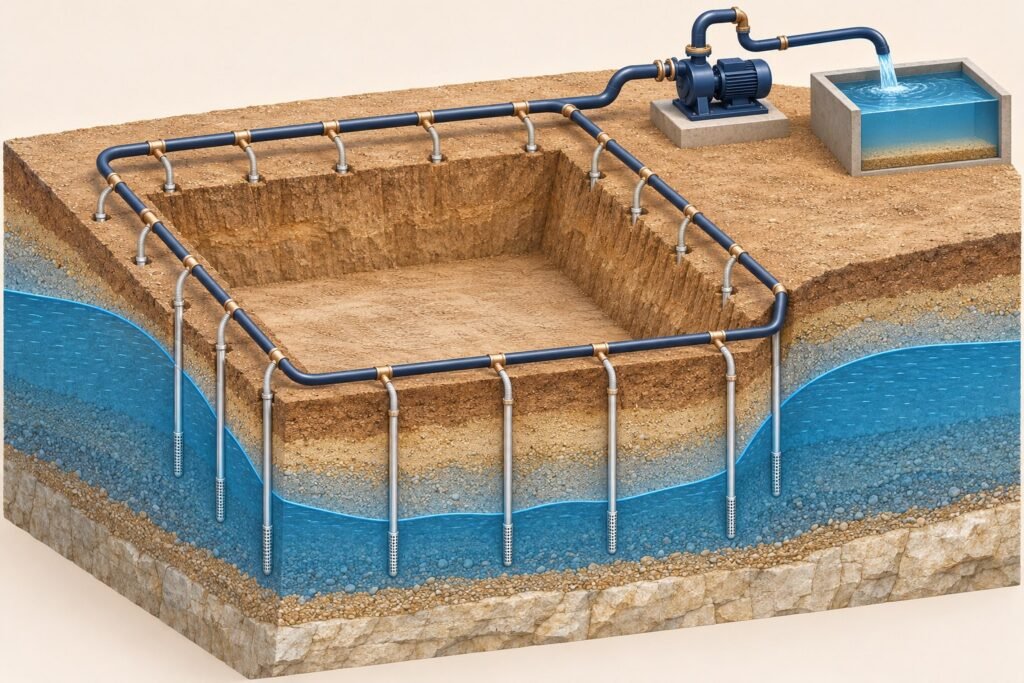
System concept; construction details are defined by the project design
Defining site requirements
Ground and groundwater data, excavation dimensions, the required level and operating period inform the system, equipment and monitoring arrangements.
Operation and discharge
The service scope specifies pumping, discharge, level and flow monitoring and operating checks, including project-specific arrangements for faults.
Coordination with surrounding works
Drawdown effects on ground and adjacent structures are assessed. Interfaces with excavation and construction stages are coordinated within the agreed service scope.
From groundwater information to an operating plan
The review begins with groundwater levels, water-bearing strata, excavation levels and the conditions required for construction in the work area. Pumping arrangements, discharge routes, equipment locations, access and potential effects on adjacent areas are considered before the operating and monitoring scope is defined. Pump capacity alone does not determine the solution: ground characteristics, groundwater recharge, required duration and discharge constraints influence the appropriate arrangement.
Operation, monitoring and excavation coordination
Dewatering is coordinated with excavation stages, foundations, equipment movement and existing services. The project scope defines measurement points, records and operating responsibilities. Changes in water levels or pumping and discharge conditions are reviewed during the works and coordinated with the relevant parties. Standby provision, maintenance and discharge requirements are defined for the individual assignment and applicable project requirements rather than assuming one arrangement will suit all sites.
Preparing the enquiry and defining the scope
Clear project information helps the proposal reflect the site requirements accurately. The company reviews available inputs and identifies missing information before the proposal defines the included works, supply and construction boundaries, coordination, inspections and records applicable to the project. Commercial comparison should consider levels, quantities, programme and interfaces rather than the price of an isolated item. Provide the available drawings and reports with the inputs below and identify whether the assignment requires a design study, construction to approved drawings or coordination of both stages. Access and working restrictions, responsibilities and approval points should also be stated so the next steps and expected deliverables are clear before the assignment begins.
- Groundwater and excavation levels and ground information
- Expected operating period and construction stages
- Space for pumps, pipework and collection points
- Discharge route, measurement, standby and maintenance requirements
Project questions
Before construction
Practical answers to help define the scope and prepare site information
What information defines a dewatering scope?
Ground information, groundwater and excavation levels, operating duration and discharge arrangements inform the equipment, operation and monitoring requirements for the project.
What is needed for a proposal?
Provide the location, ground investigation report, excavation depth, groundwater level, expected duration, available discharge arrangements and required operating scope.
When is the system shut down?
Shutdown timing and sequence are coordinated with the design, excavation, construction and stability requirements under the operating plan.
Is the number of pumps enough to compare proposals?
Pump count alone does not explain collection and discharge arrangements, operating duration or monitoring. Groundwater conditions, strata, levels, discharge routes and standby and maintenance requirements are reviewed. The proposal then defines the system and operating scope so alternatives can be compared on a consistent basis.
Should the discharge route be defined before operation?
The discharge route is an essential coordination input. Its location, constraints and any settling or treatment requirements defined by the assignment and relevant parties are reviewed. Pipework, connection points and operating responsibilities should be clearly included in the proposal and agreed programme.
Can the dewatering scope change as construction progresses?
Levels, available working areas, work fronts and required duration may change as excavation and foundation works progress. Dewatering is coordinated with those stages. Revisions to operation, monitoring or discharge requirements are reviewed as needed while maintaining clear responsibilities and records throughout the assignment.
The next step
Let’s review your site requirements
Share the available drawings, ground investigation report, excavation depth and required scope so we can discuss the requirements and next steps