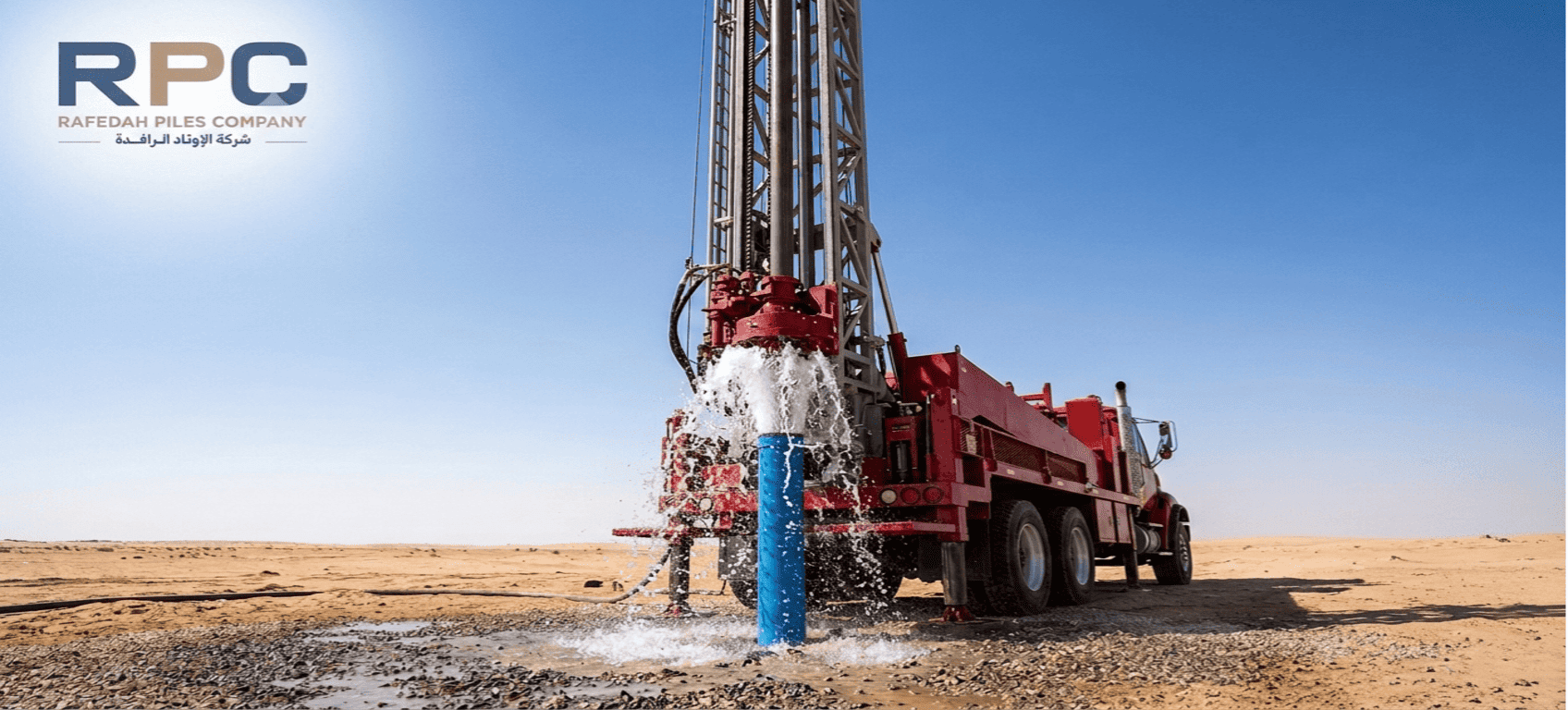
Artesian well drilling represents the gold standard of modern hydrogeological engineering for properties that demand an uncompromised, high-volume water source. Unlike shallow dug wells that merely skim the top of unstable, unconfined water tables, artesian wells penetrate hundreds of meters through dense layers of rock and clay to tap into heavily pressurized, deep-earth aquifers.
Whether you are managing a massive commercial agricultural operation in the fertile soils of Riyadh, Al Kharj, building a luxury private estate in historic Diriyah, establishing an industrial facility in Al Muzahmiyah, or launching an agro-investment in Thadiq, deep-well drilling provides absolute water independence. Rpc co delivers specialized hydrogeological expertise, heavy-duty mechanical drilling rigs, and comprehensive regulatory clearance services to transform your subsurface geology into a high-performing financial asset. 
RPC Co. specializes in advanced shoring excavation, deep excavation solutions, providing safe, efficient solutions for deep excavations and project stability.
Securing Water Sovereignty in Saudi Arabia
In an arid climate characterized by intense summer heat, sparse annual rainfall, and a booming economic landscape, establishing a self-sustaining, long-term, high-yield water supply is a strategic imperative for property owners, industrial operators, and agricultural investors throughout the Riyadh Province.  Relying solely on municipal water networks or fluctuating surface-level tanker deliveries introduces substantial overhead volatility and operational risk to your business or estate.
 What Is an Artesian Well? Geological Principles & Subsurface Mechanics
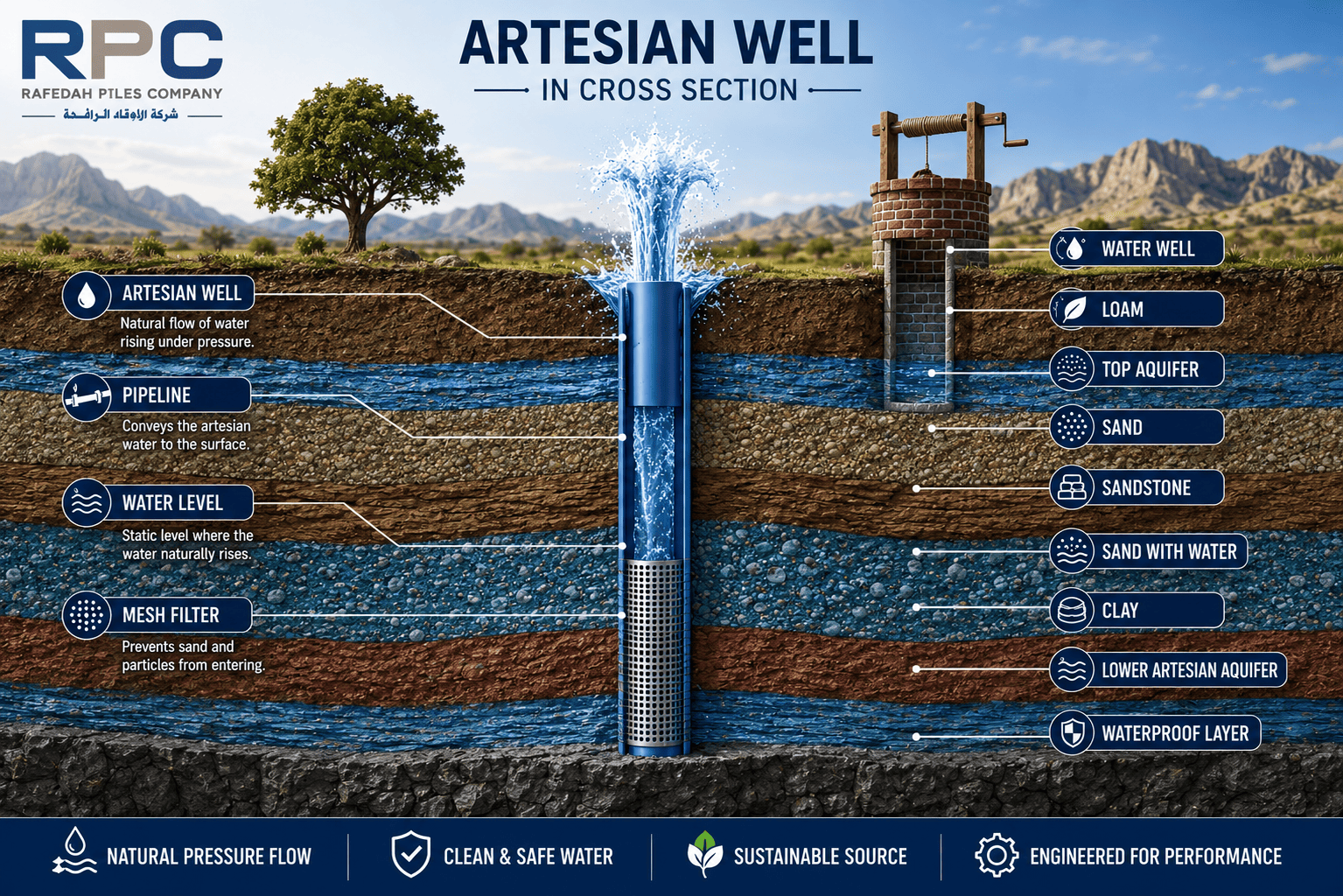
To truly appreciate the value of an artesian well, one must understand the structural mechanics of the Earth’s subterranean strata. In classic hydrogeology, an artesian well is specifically defined by its interaction with a confined aquifer. A confined aquifer is an underground water-bearing layer of porous rock or sand trapped between upper and lower layers of completely impermeable material, such as dense clay, shale, or solid bedrock layers.
The water trapped within these deep rock formations originates from precipitation that entered the aquifer at a higher geographic elevation, often hundreds of kilometers away. Over millennia, this water migrates downward, becoming highly compressed beneath the immense structural weight of the earth. This creates substantial hydrostatic pressure.
When a specialized drilling rig punctures the upper impermeable layer, this natural pressure acts like a hydraulic piston, driving the column of water up the borehole without the immediate aid of mechanical pumping.
 Flowing Artesian Well: If the underground hydrostatic pressure is sufficiently high, the water rises completely past the surface level, creating a continuous, self-flowing fountain that requires zero mechanical energy to extract.
 Non-Flowing Artesian Well: In lower-pressure formations, the water rises significantly higher than the aquifer bed but stabilizes below the surface level, requiring a multi-stage submersible pump to span the remaining distance to your storage tanks.
Historically, this engineering phenomenon was first thoroughly documented in the 12th century by Carthusian monks in the Artois province of France, giving rise to the name “artesian.” Today, in the hyper-arid landscape of Saudi Arabia, Rpc Co harnesses this ancient geological principle using advanced rotary drills, specialized mud-pumps, and complex filtration systems to extract high-purity water from ancient deep aquifers.
Why Artesian Wells Are Ideal for Riyadh’s Desert Environment
The unique environmental and geological conditions of the central region make deep artesian drilling the most reliable method for long-term water security. Properties located throughout the outer districts of Riyadh face distinct challenges that render shallow water systems obsolete:
 Access to Resilient, Ancient Aquifers: Riyadh sits atop major sedimentary rock basins containing prolific deep aquifers, including the Minjur, Wasia, and Biyadh formations. While surface water reserves dry up during peak summer heatwaves, these deep subterranean vaults hold billions of cubic meters of water. They remain entirely insulated from surface weather patterns, providing a steady water yield during prolonged droughts.
 Overcoming Infrastructure Gaps in Remote Zones: As residential developments, luxury equestrian estates, and industrial parks expand outward from the city center, they often outpace municipal water grids. Tapping into a deep artesian aquifer allows developers to build self-contained communities far beyond the reach of municipal pipelines, removing infrastructural bottlenecks.
 Eradicating the Logistical Burden of Water Trucks: Relying on constant fleets of water tankers introduces long-term financial uncertainty. Tanker services are subject to fuel surcharges, driver availability, and variable delivery schedules. A private artesian well transforms a fluctuating operational expense into a fixed, predictable capital asset, delivering pressurized water exactly when needed.
 Perfect Fit for High-Demand Sectors: The large water volumes extracted from artesian formations are ideal for commercial date palm cultivation, expansive landscape greening, livestock operations, manufacturing plants, and large-scale industrial processing facilities.
3.  Key Benefits of Artesian Well Drilling in Riyadh
Investing in a deep artesian water system engineered by RPC Co yields structural, financial, and operational benefits for commercial enterprises, agricultural entities, and domestic estates:
1.  Reliable Water Supply All Year Round
Artesian wells access deep groundwater reserves that are completely isolated from seasonal weather changes. This ensures a stable, uniform water source even during extended summer dry periods common in Riyadh and surrounding regions, preventing crop failure or industrial downtime.
2. Higher Water Yield
Because artesian wells draw from high-pressure water-bearing zones, their volume output is significantly higher than shallow wells. This makes them ideal for high-demand operations, including:
 Agricultural Irrigation: Sustaining vast networks of crop fields and greenhouses.
 Landscaping Projects: Maintaining green spaces for luxury residential developments and public parks.
 Livestock Watering: Providing safe, continuous hydration for animal husbandry operations.
 Industrial Processes: Supplying concrete batching plants, cooling loops, and factories.
 Residential Developments: Ensuring reliable water delivery for private villa compounds.
3.  Premium Water Quality & Natural Filtration
Water drawn from deep aquifers is naturally filtered through hundreds of meters of rock, sand, and soil before reaching the well. This slow migration process yields several distinct quality advantages:
 Reduced Surface Contamination: Free from the organic impurities found in shallow tables.
 Improved Optical Clarity: Highly crystal-clear water with minimal sediment turbidity.
 Lower Bacterial Exposure: Naturally sterile environment deep underground shields water from pathogens.
 Balanced Mineral Profiles: Rich in natural electrolytes that can enhance taste and agricultural efficacy.
4.  Reduced Contamination Risks
Surface water and shallow wells are highly vulnerable to environmental degradation due to close proximity to topsoil activities. They are frequently affected by:
 Intense sandstorms and dust infiltration.
 Agricultural chemical and fertilizer runoff.
 Industrial surface pollutants and oil spills.
 Wastewater infiltration from failing septic systems.
Because artesian water originates from deeper geological formations protected by thick confining beds, it remains completely insulated from these environmental hazards.
5.  Lower Long-Term Water Costs
While drilling an artesian well requires a capital investment at the start, it drastically lowers your operational expenditures over time. Long-term savings include:
 Total elimination of water delivery truck invoices and logistics.
 Drastic reduction in municipal metered water bills.
- Higher agricultural profitability through stable crop watering schedules.
 Total operational independence from water utility price inflation.
6. Increased Property Value
A property equipped with a fully permitted, high-yielding artesian well commands a premium market valuation. It serves as a major asset for future buyers, investors, and developers who prioritize water security.
7.  Environmentally Sustainable Water Management
When engineered according to strict hydrogeological assessments and state water allocation rules, an artesian well promotes balanced groundwater use, protecting vital natural resources for the future of the Kingdom.
4.  Health and Water Quality Advantages
Water drawn from deep artesian formations undergoes deep, natural filtration that strips away organic impurities while balancing its chemical structure.
Artesian water retains its natural mineral properties, providing excellent taste and structural benefits for agricultural crops. However, due to the high mineral content characteristic of Saudi Arabian geology, RPC co requires professional laboratory chemical testing for every project to check Total Dissolved Solids (TDS) levels and ensure full compliance with Saudi Arabian Standards Organization (SASO) water metrics.
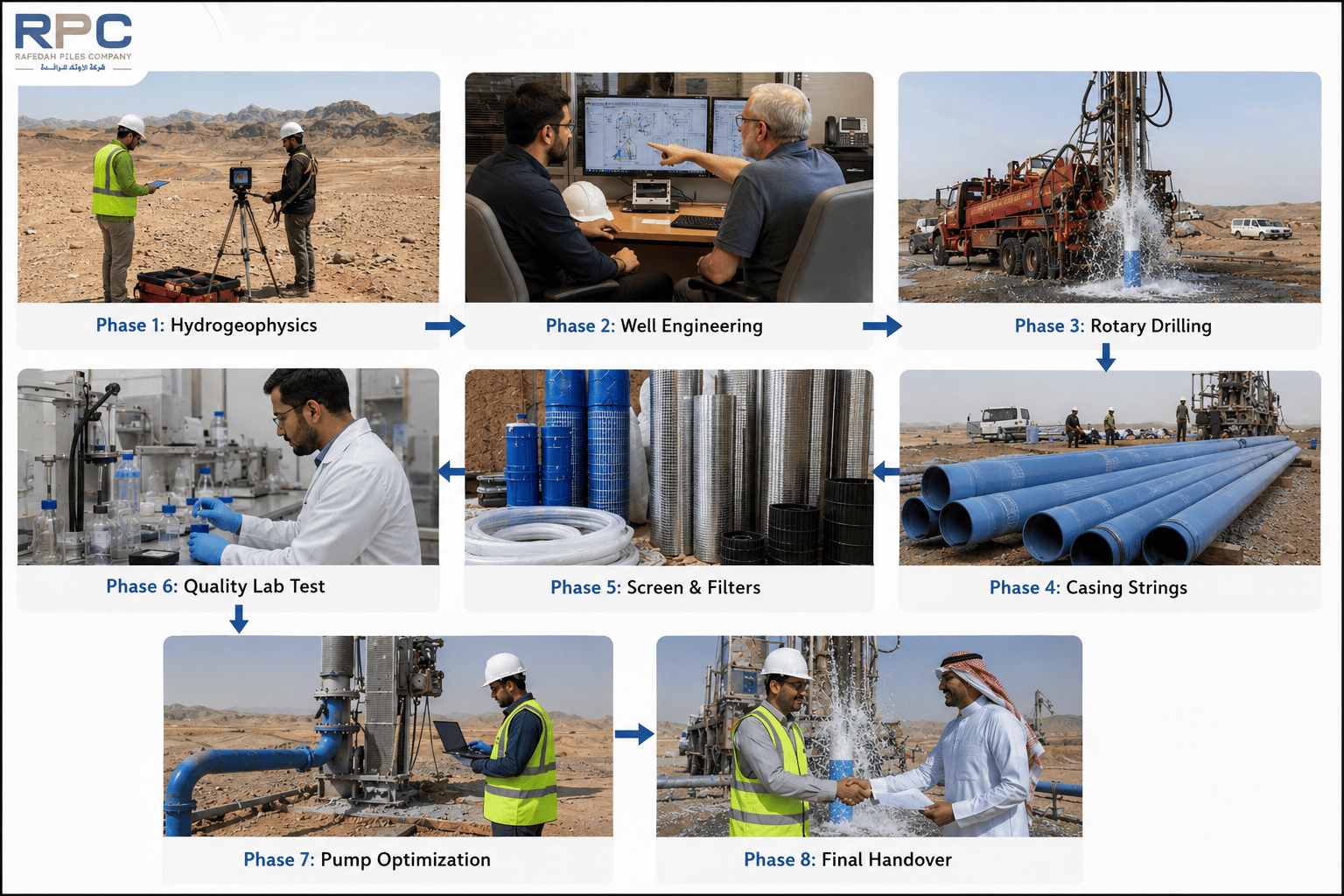
5.  Professional Artesian Well Drilling Process
At RPC Co, we maintain that a water well is not just a hole in the dirt—it is a highly engineered, multi-layered structural asset. We execute every drilling project in strict alignment with international drilling standards and regional environmental laws through a structured, eight-stage lifecycle:
 Hydrogeological Survey & Site Investigation
Every successful well begins with detailed earth science. Our specialized hydrogeologists run comprehensive geophysical site studies, utilizing electrical resistivity profiling and seismic soundings to map the underlying rock layers. This phase allows us to:
Map underground geological formations and fault lines.
Locate the exact depth and thickness of pressurized aquifers.
Estimate initial water tables and expected flow velocities.
Pinpoint the optimal drilling location on your property to eliminate guesswork.
 Well Design & Engineering
Based on the survey results, our engineering team prepares a detailed technical blueprint tailored to your specific application. This design plan includes:
Target drilling depths and borehole diameter clearances.
Material grades for structural casing strings (Carbon Steel vs. High-Density PVC).
Detailed well screen slot sizing to optimize water inflow.
Submersible pump horsepower and flow rate requirements.
Rigid environmental protection measures to prevent cross-aquifer contamination.
Artesian Well Drilling Operations
Once designs are finalized, we mobilize our advanced heavy-duty mobile drilling rigs to your site. Under the strict supervision of senior mechanical engineers, excavation begins. Core activities include:
Continuous borehole drilling using rotary or air percussion configurations.
Real-time geological logging of soil and rock strata.
Extraction and analysis of physical soil chips and rock samples.
Precise identification of the target water-bearing zones.
Continuous monitoring of down-hole pressure and drilling fluid metrics.
 Well Casing Installation
Immediately following drilling, heavy-duty casing strings are lowered into the borehole. Casing acts as the structural spine of the well, serving several critical functions:
- Prevents Catastrophic Collapse: Holds back loose sand and gravel layers permanently.
 Protects Subsurface Water Quality: Seals out low-quality shallow water tables.
- Improves Structural Integrity: Provides a clean, stable channel for the pump system.
 Extends Operational Lifespan: Guarantees the well remains functional for decades.
Well Screen & Filtration System Installation
At the bottom of the casing string, directly opposite the water-producing zones, we install engineered sand screens and gravel packs. These specialized components:
Block fine desert sand, silt, and rock debris from entering the well column.
Maintain excellent water clarity and minimize sediment wear.
Maximize fluid production efficiency by lowering friction resistance.
Protect delicate submersible pumps from mechanical abrasion.
Pump Installation & Well Development
To prepare the well for active service, we initiate well development. This mechanical process involves surging and high-velocity pumping to clear away residual drilling muds and open up the surrounding rock pores. We then install the target submersible pump, checking electrical wiring, torque parameters, and check-valve components.
Comprehensive Water Quality Testing
We harvest clean water samples directly from the well stream and transmit them to an accredited laboratory for multi-parameter chemical and microbiological profiling. We evaluate:
Total Dissolved Solids (TDS) and overall salinity index.
Concentrations of calcium, magnesium, sodium, and iron.
pH levels and chemical hardness metrics.
Absolute biological purity to confirm suitability for irrigation, industrial, or domestic use.
 Final Commissioning & Handover
After verifying flow stability and system performance, the well is officially commissioned and delivered into your care. Clients receive a complete turnover documentation packet containing:
Official lithological logs and well construction diagrams.
Certified pumping test drawdown curves and maximum safe yield metrics.
Laboratory water analysis certifications.
Tailored preventative maintenance programs to maximize long-term asset value.
6.  Factors Affecting Artesian Well Drilling Costs in Riyadh
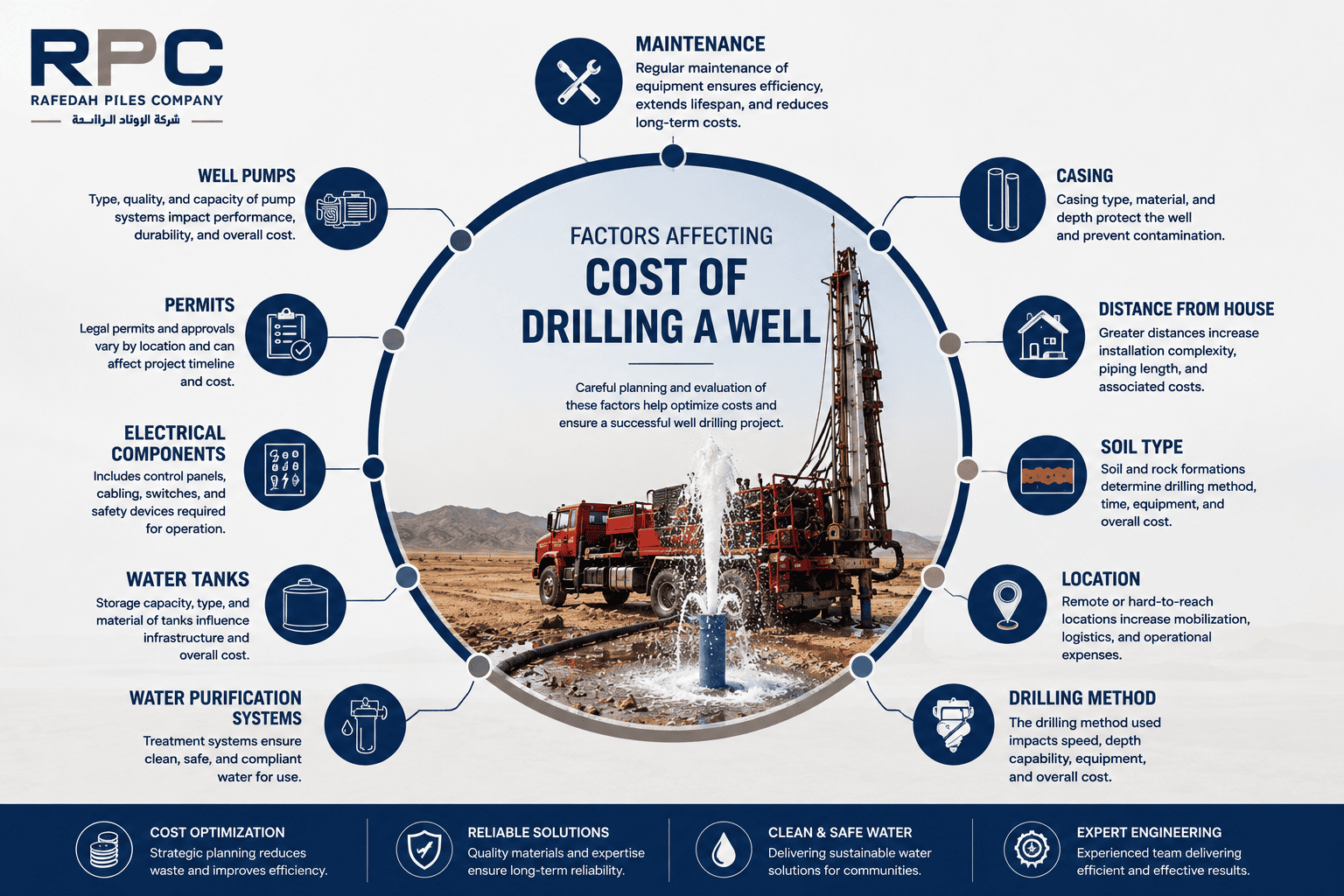
Determining the precise financial investment required to construct an artesian well involves an evaluation of several technical variables. RPC co prioritizes absolute pricing transparency. Below are the primary variables that shape your project budget:
1.  Drilling Depth
The primary cost driver. Deeper target aquifers require extended labor hours, increased fuel consumption for machinery, more feet of structural casing strings, and larger drilling rigs.
2.  Soil & Geological Conditions
The type of rock layers beneath your property directly impacts drilling speeds and equipment wear.
Easy Terrain: Loose sand and alluvial silt drill quickly but demand immediate casing to prevent cave-ins.
Dense Bedrock: Hard limestone or granitic shield formations slow down penetration speeds and require specialized diamond-tipped bits or pneumatic air hammers.
Estimated Cost Variation by Ground Conditions
The table below illustrates how subsurface rock formations can impact baseline drilling expenditures:
| Ground Condition Profile | Estimated Cost Impact Matrix | Technical & Mechanical Rationale |
| Easy Sand & Soft Soil | -30% to -35% | Rapid bit penetration; minimal tool wear; requires full casing to block cave-ins. |
| Moderate Soil / Clay | -10% to -15% | Consistent drilling speeds; stable soil mechanics; standard mud-rotary setup. |
| Partial Rock Formation | +80% to +100% | Interbedded limestone layers; demands increased down-hole pressure and slower rotation. |
| Dense Rock Formation | +140% to +160% | Hard bedrock & granitic shield; requires diamond-core bits and pneumatic air hammers. |
3.  Geographic Location Within the Riyadh Region
Your physical coordinates impact mobilization and logistics. Moving heavy rigs, support trucks, and supply water tankers to remote agricultural fields or distant desert locations involves additional transport logistics and planning compared to urban industrial zones.
4. Well Casing Material Specifications
The diameter of the hole and the material grade specified for the casing strings affect your material budget. Large-diameter commercial wells requiring thick-walled carbon steel casing carry higher material costs than standard domestic PVC lines.
5.  Submersible Water Pump System
Pump costs are determined by your operating depth and volume demands. Pushing water up from a deep aquifer requires a high-horsepower, multi-stage submersible pump paired with heavy-duty electrical control panels.
6.  Water Storage Tanks
For large-scale agricultural operations or factories, integrated water storage tanks (such as GRP or elevated steel tanks) are necessary to buffer daily water use, which adds to the overall project scope.
7. Shower / Water Treatment Systems
If laboratory testing reveals high salinity or high mineral density, integrating filtration arrays, water softeners, or specialized Reverse Osmosis (RO) desalination units is required to treat the water for its intended application.
 8. Permits & Regulatory Requirements
Navigating government portals to secure approved MEWA drilling licenses involves technical report generation and engineering documentation mapping.
Estimated Artesian Well Drilling Costs in Riyadh, Saudi Arabia
The financial table below outlines general market estimates for initial budgeting and planning purposes across the Central Province:
| Well System Type | Typical Depth Range (m) | Primary Engineering Application in KSA |
| Residential Well | 50 – 150 m | Suburban villas, private estates, and domestic backup use. |
| Agricultural Well | 100 – 300 m | Medium-scale farms, livestock watering, and forage fields. |
| Irrigation Well | 100 – 400 m | Commercial date palm plantations and large landscape greening. |
| Deep Artesian Well | 150 – 600+ m | High-volume water bottling plants and commercial projects. |
| Industrial Well | 200 – 800+ m | Manufacturing centers, concrete plants, and cooling towers. |
Technical Note: Actual final invoices depend heavily on local geological strata, verified drilling depth, specific pump horsepower, treatment filtration gear, and MEWA permit conditions.
Contact RPC Co for an exact engineering estimate.
7.  Why Choose Rpc Co for Artesian Well Drilling in Riyadh?
Partnering with Rpc Co ensures you receive a highly durable, legally compliant water asset engineered to perform for decades.
 Experienced Drilling Specialists: A seasoned team of senior hydrogeologists, mechanical engineers, and rig operators with extensive local experience.
- Advanced Drilling Technology: Modern, heavy-duty rotary and air percussion drilling rigs capable of penetrating the toughest rock layers in Saudi Arabia.
- Deep Hydrogeological Expertise: Advanced geophysical site mapping to locate productive water-bearing zones and minimize drilling risks.
- Full Legal & Regulatory Management: Complete handling of the technical workflow to secure official MEWA drilling permits and compliance certificates.
- Rigid Quality Assurance: Use of premium, corrosion-resistant casing strings and sand screen filtration arrays.
- Accredited Laboratory Testing: In-depth water analysis to accurately guide pump selection and filtration design.
- Turn-Key Project Management: Complete oversight from initial site survey through excavation, pump installation, and final system commissioning.
- Transparent Competitive Pricing: Clear cost breakdowns paired with detailed material specifications for every project.
- Responsive Technical Support: Dedicated engineering assistance to ensure your water infrastructure operates smoothly.
- Long-Term Maintenance Solutions: Custom preventative maintenance, pump servicing, and well cleaning programs to preserve asset performance.
 Contact RPC Co Today
Need professional artesian well drilling services in Riyadh, Saudi Arabia? Secure your water independence with our turn-key groundwater solutions. From initial hydrogeological surveys and MEWA permit management to heavy-duty rock drilling, pump installation, and lab testing, RPC Co is your trusted engineering partner.
- Get in touch today to schedule a professional site consultation and receive a customized engineering quotation for your water well project!
- Investing in an artesian well is more than just securing water access—it is a commitment to long-term sustainability, operational independence, and cost security for your property, farm, or business.
1. What is the average depth of an artesian well in Riyadh?
 Well depths typically range from 150 to 600 meters depending on your exact coordinates in the Riyadh Province. Properties situated along the rocky plates of the Tuwaiq Escarpment or northern districts often require drilling down deeper to tap into pressurized aquifers, whereas soft wadi basins may hit water-bearing zones at shallower depths.
2. How much does artesian well drilling cost in Riyadh?
A professionally engineered artesian well project generally starts from SAR 60,000 and can exceed SAR 300,000. The final investment depends heavily on total depth, the hardness of the rock layers encountered, the casing material grade, pump horsepower requirements, and associated MEWA permitting parameters.
3. How long does the entire drilling process take to complete?
Most deep artesian well projects require between 3 days to several weeks onsite. This timeframe includes rig mobilization, active borehole excavation, setting structural casing strings, installing gravel packs and sand filters, and conducting final flow and drawdown tests.
4. Is artesian well water completely safe for drinking in Riyadh?
Artesian water is naturally pure and well-protected from topsoil pollution, but it must be tested before direct consumption. Because subsurface formations in Saudi Arabia contain rich mineral beds, the raw water can carry high salinity or Total Dissolved Solids (TDS). Rpc Co runs comprehensive laboratory testing for every project; if mineral counts are high, we install a tailored water softening or Reverse Osmosis (RO) filtration system to ensure safe drinking water.
5. Do all artesian wells require mechanical pumping systems?
Not always. If you tap into a highly pressurized flowing artesian aquifer, natural hydrostatic pressure can force the water completely past the surface level without a pump. However, many deep formations in the region feature lower hydrostatic lift, meaning the water column rises significantly up the borehole but stabilizes below the surface. In these setups, a multi-stage electric submersible pump is installed to move the water into storage tanks.
6. Can artesian wells be used for large-scale agricultural irrigation?
Yes. Deep artesian wells are widely used to sustain commercial date palm plantations, greenhouse arrays, livestock operations, and massive agricultural developments throughout key farming zones like Al Kharj. Tapping into deep aquifers guarantees a stable water volume that remains entirely unaffected by summer heatwaves or surface droughts.
7. What specific government permits are required to drill a well in Saudi Arabia?
Every water well project requires a formal drilling license issued by the Ministry of Environment, Water and Agriculture (MEWA) via their integrated digital portal. Operating a drilling rig without a legal permit carries severe financial penalties and can result in the forced closure of the well. Our engineering team manages the complete regulatory application process for our clients.
8. What is the expected operational lifespan of an artesian well?
9. What periodic maintenance does a deep artesian well require?
Deep wells are low-maintenance assets, but they benefit from an inspection every 12 to 24 months. Standard maintenance involves checking electrical control panel parameters, testing the pump’s power draw, cleaning sand filters, and measuring dynamic water levels to ensure the system continues to perform efficiently.
10. How can I determine if my property in Riyadh is suitable for an artesian well?
Determining suitability requires a professional hydrogeological survey and geophysical site assessment. Our engineers deploy specialized electrical resistivity equipment to map your subsurface geology, verifying the presence, depth, and volume potential of underlying aquifers before mobilizing a drilling rig.